Medical billing and coding salary trends sets the stage for this enthralling narrative, offering readers a glimpse into a story that is rich in detail. These roles play a crucial part in the healthcare ecosystem, translating complex medical data into understandable formats for billing and insurance purposes. With a growing demand for healthcare services, understanding the salary landscape in this field is essential for both aspiring professionals and those already in the industry.
The average salary range for medical billing and coding professionals varies by region and experience level, influenced by factors such as certification and ongoing education. As the industry evolves, it’s vital to stay informed about these trends to maximize earning potential and career growth.
Medical Billing and Coding Salary Overview
The medical billing and coding profession is an essential part of the healthcare system, responsible for translating patient care into billable services. As this field continues to grow, understanding salary trends can provide insights for both new and experienced professionals. The average salaries for medical billing and coding roles vary significantly by region, experience level, and various other factors.Factors influencing salary trends in medical billing and coding include geographic location, industry sector, level of education, certifications obtained, and years of experience.
For instance, metropolitan areas tend to offer higher salaries due to the higher cost of living and demand for skilled professionals. Additionally, those working in specialized medical fields or for larger healthcare organizations may also enjoy higher compensation packages.
Regional Salary Differences
Regional differences play a key role in determining salaries for medical billing and coding specialists. Below are average salary ranges across various regions in the United States, showcasing the diversity in compensation:
- Northeast: Medical billing and coding professionals can expect an average salary ranging from $50,000 to $65,000, with cities like New York and Boston on the higher end due to their dense healthcare markets.
- Midwest: In states like Illinois and Michigan, salaries range from $45,000 to $60,000, reflecting a moderate demand for services in the region.
- South: The southern states, including Texas and Florida, usually offer salaries between $40,000 and $55,000, influenced by a lower cost of living.
- West: The West Coast, particularly California, may see salaries from $55,000 to $75,000, attributed to a higher cost of living and robust healthcare sector.
Experience Levels and Corresponding Salaries
Experience profoundly impacts salary in the medical billing and coding field. Newly certified professionals typically start in entry-level roles, while those with more experience can command significantly higher salaries. The following breakdown illustrates the typical salary ranges based on experience:
- Entry-Level (0-2 years): Salaries generally range from $35,000 to $45,000. Entry-level positions usually include billing clerks or junior coders.
- Mid-Level (3-5 years): With a few years of experience, professionals can earn between $45,000 and $60,000. Roles may include billing specialists or certified professional coders.
- Senior-Level (5+ years): Experienced individuals in senior roles can earn upwards of $60,000, with some earning over $80,000, especially if they take on managerial or specialized positions.
“The more specialized the role in medical billing and coding, the higher the potential salary, as complex coding requires advanced knowledge and skill.”
In summary, the medical billing and coding profession offers diverse salary potentials influenced by geographical location, experience, and specialization. Understanding these factors helps individuals make informed career decisions and negotiate better compensation packages.
Impact of Certification on Salary

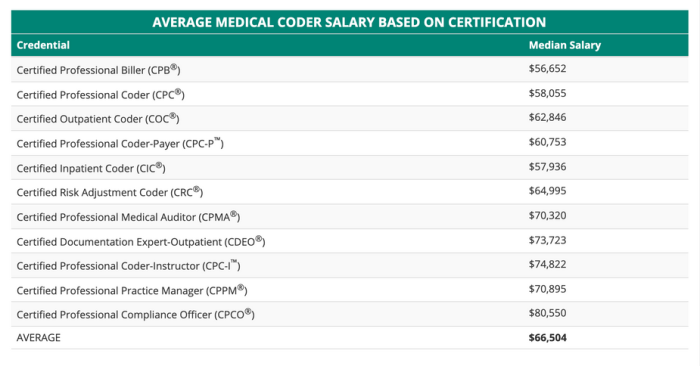
Certification in medical billing and coding significantly influences earning potential within the healthcare industry. As the demand for qualified professionals rises, possessing the right credentials can set candidates apart, leading to higher salaries and better job prospects. With the medical billing and coding landscape continuously evolving, understanding the role of certification is essential for anyone looking to maximize their career opportunities.Obtaining certification can markedly enhance a professional’s salary.
Certifications such as Certified Professional Coder (CPC), Certified Coding Specialist (CCS), and Certified Billing and Coding Specialist (CBCS) are among the most recognized in the industry. These credentials not only demonstrate a mastery of coding principles but also indicate a commitment to ongoing professional development. Studies show that certified medical billing and coding professionals earn significantly more than their non-certified peers.
Certifications Enhancing Earning Potential
The following certifications are recognized for improving salary prospects in the medical billing and coding field:
- Certified Professional Coder (CPC): Offered by the American Academy of Professional Coders (AAPC), CPC certification is highly sought after and can lead to salaries ranging from $50,000 to $70,000 annually.
- Certified Coding Specialist (CCS): Administered by the American Health Information Management Association (AHIMA), this certification is geared towards inpatient coding and can yield salaries over $75,000.
- Certified Billing and Coding Specialist (CBCS): This certification from the National Healthcareer Association (NHA) offers a pathway to entry-level positions with competitive salaries, typically around $45,000 to $55,000.
Statistics reinforce the salary advantages of certification. According to the AAPC’s 2021 Salary Survey, certified professionals can earn an average of 20% more than their non-certified counterparts. This gap illustrates the tangible benefits of investing time and resources into certification, as employers often prioritize certified candidates for higher-paying roles.Continuing education is equally vital in this field. As regulations and coding practices evolve, staying updated through ongoing training and certification renewals can directly affect salary trends.
Professionals who engage in lifelong learning are more likely to advance in their careers, acquire specialized knowledge, and command higher wages.
“Professionals who pursue additional certifications can expect an average salary increase of 10-15% per certification attained.”
In summary, obtaining certification and engaging in ongoing education significantly impacts salary trends in medical billing and coding. Professionals committed to professional development enhance their earning potential and job security in a competitive healthcare landscape.
Future Trends in Medical Billing and Coding Salaries
The landscape of medical billing and coding is rapidly evolving, influenced by technological advancements and shifts in healthcare delivery methods. As we look ahead, several factors are expected to shape salary trends in this field, leading to potentially significant changes over the next decade. Understanding these trends is essential for professionals and newcomers alike, as they navigate their careers in a dynamic environment.Emerging technologies are poised to have a profound impact on salaries in medical billing and coding.
The integration of artificial intelligence (AI), machine learning, and automation is streamlining billing processes, reducing the need for extensive manual input. These technologies can enhance accuracy and efficiency, allowing coders to focus on more complex tasks. As demand for skilled professionals who can work alongside these technologies grows, salaries are likely to adjust upward, reflecting the increased value of expertise in these areas.
Impact of Telehealth and Remote Work on Salaries
The rise of telehealth services has transformed the healthcare landscape, and its influence on medical billing and coding salaries cannot be overlooked. The increase in remote working arrangements is expected to reshape the traditional salary structures of this profession. As healthcare providers expand their telehealth services, the need for coders who understand telehealth billing nuances will become critical. This specialized knowledge may command higher salaries, as employers seek professionals who can navigate the complexities of billing for virtual visits.To illustrate the anticipated changes in salaries, the following table projects salary trends over the next 5-10 years based on current market dynamics:
| Year | Projected Average Salary | Key Influencing Factors |
|---|---|---|
| 2024 | $55,000 | Increased demand for telehealth coding knowledge |
| 2025 | $58,000 | Growth in automation and AI tools |
| 2026 | $61,000 | Expansion of remote work opportunities |
| 2027 | $64,500 | Increased focus on compliance and regulatory changes |
| 2028 | $68,000 | Integration of advanced training and certification programs |
| 2029 | $72,000 | Greater reliance on telehealth services |
| 2030 | $75,000 | Demand for specialized coding knowledge in emerging fields |
The projected increases in salaries reflect a broader trend towards valuing specialized skills and adaptability in the evolving healthcare landscape. As professionals stay current with industry changes and enhance their qualifications, they position themselves favorably for higher compensation and career advancement.
Last Word
In summary, the landscape of medical billing and coding salaries is shaped by various factors, including certification, experience, and emerging technologies. As the industry continues to adapt to innovations like telehealth, professionals must navigate these changes to secure their position and enhance their salaries. By staying updated on trends and investing in one’s education, individuals can thrive in this dynamic field.
General Inquiries
What is the average salary for medical billing and coding professionals?
The average salary typically ranges from $40,000 to $60,000, depending on experience and location.
How does certification affect salary?
Certified professionals often earn higher salaries, with potential increases of 20% or more compared to their non-certified counterparts.
What skills are essential for a successful career in medical billing and coding?
Key skills include attention to detail, knowledge of medical terminology, and proficiency in coding systems, as well as strong analytical abilities.
Are there remote work opportunities in this field?
Yes, many positions offer remote work options, especially since the rise of telehealth services.
What future trends may impact salaries in medical billing and coding?
Technological advancements and the increasing demand for telehealth services are expected to influence salary trends positively in the coming years.


